San Antonio Independent School District is relaxing some of the “High 5” standards, a teaching system recently implemented districtwide that was met with backlash from families and teachers.
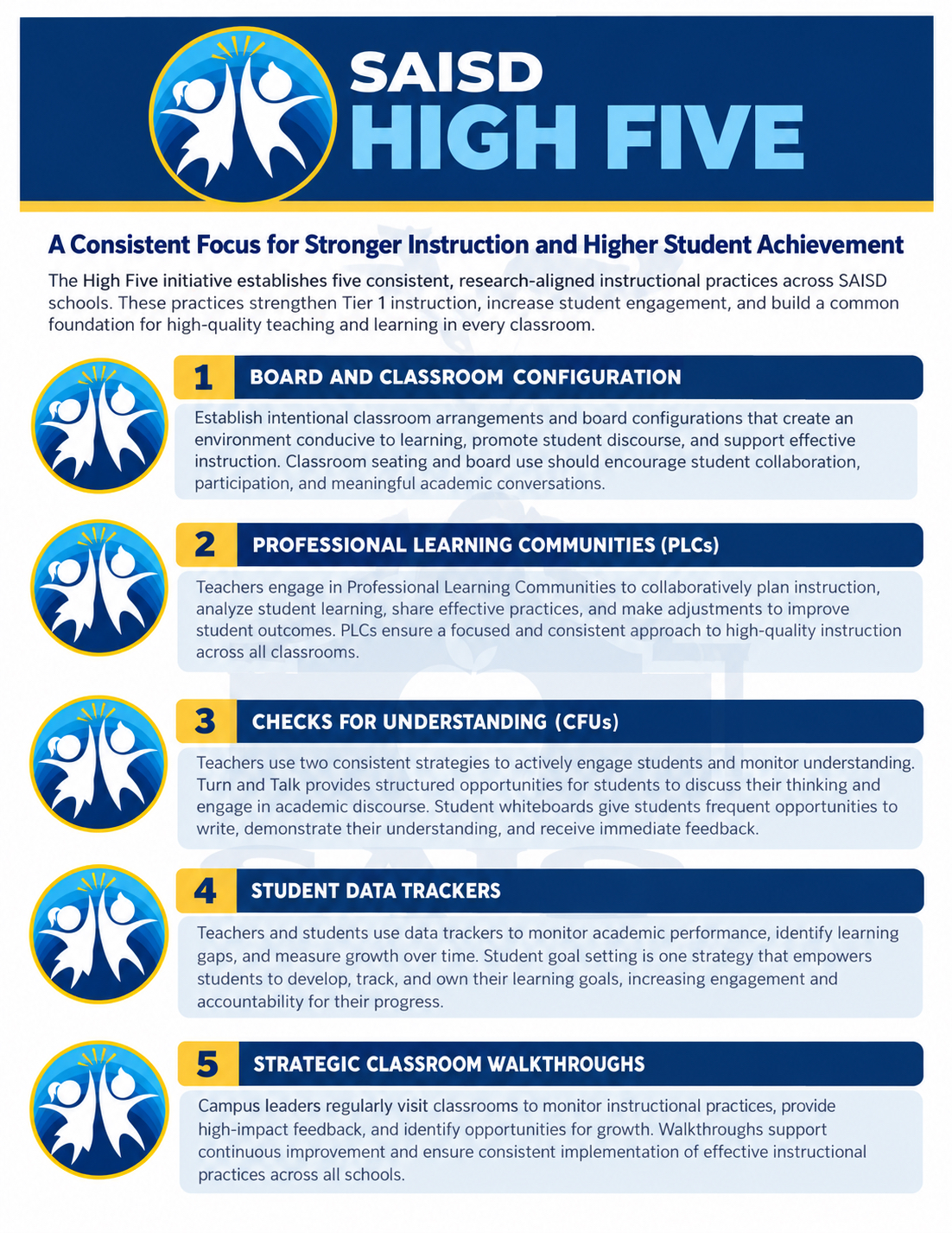
Called the High 5, the model teaching practices, student data reporting and classroom setups across most of the district’s 80 schools. This meant teachers had to use the same check for understanding strategies like turn-and-talks and whiteboards, attend weekly “professional learning communities” and use daily exit tickets.
As part of a separate initiative, the district also rolled out standardized lessons, creating slides and presentation teacher had to use.
SAISD’s new leadership rolled out this learning model in September district wide, from preschool to high school at the consecutively failing campuses to even the highest-achieving pockets.
It was one of Superintendent Adrian Bustillos’ first and most dramatic overhauls of SAISD since he took the helm in July.
“There are different philosophies and ways to get to the end. This is the approach we’re taking today,” Bustillos said during an Oct. 19 school board meeting when dozens of veteran teachers publicly shared their concerns over High 5, calling it formulaic and overly prescriptive.
Currently, 34 of SAISD’s schools have a failing rating from the state’s accountability system and 33 schools have A or B ratings. The ratings largely rely on state testing scores to measure learning.
Of the failing schools, three have gotten four consecutive failing scores with no improvement, putting the district at risk of state intervention if a school earns a fifth bad rating at the end of the 2026-27 school year.
What changed?
After weeks of getting pushback from the San Antonio Alliance, the district’s teacher support personnel union, SAISD’s leaders eased up on some of the curriculum resources — district-created slides and lesson plans — for A and B campuses.
A and B schools are no longer required to use district-created lesson plans and presentation slides, but they are still being encouraged to do so and may opt in, said SAISD spokesperson Laura Short on Friday. Officials say the curriculum materials are a separate initiative from the High 5.
SAISD is also working on a separate initiative involving curriculum resources that C, D and F rated schools will be required to use. Short said this initiative launched within the last few days and was developed in collaboration with teacher feedback.
While the “check for understanding” are still required at all levels, there’s more flexibility to use strategies outside of whiteboards and turn-and-talks, which are still prioritized.
“These strategies are intentionally emphasized because they promote student discourse and provide students with additional opportunities to express their thinking through writing,” Short said in an email. “Teachers have the flexibility to incorporate other Checks for Understanding strategies; however, Turn and Talk and student whiteboards remain priority practices within our instructional framework.”
There have been no change to expectations regarding classroom board configuration, professional learning communities (PLCs), student data trackers or strategic classroom walkthroughs.
The San Antonio Alliance said the changes are a “start” but not enough.
“We still have work to do to roll-back the rigidity and universality of this micromanaging and hugely unpopular central office mandate, but this is a start,” the union wrote on social media.
Except for SAISD’s in-district charter schools, which can opt in if they want, everyone is still expected to administer daily exit tickets and have prominently displayed learning objectives on the walls and collaborative seating.
Seating configuration is a point district leaders quickly clarified after several teachers expressed concerns about only being able to clump desks in pairs, which SAISD officials said was a miscommunication.
“While collaborative seating arrangements remain an expectation, teachers have flexibility in determining the number of students in each group and how desks are arranged based on the instructional activity, classroom space, and needs of their students,” said Short.
During the Oct. 19 meeting, Bustillos said he would take feedback but stressed that the High 5 had only been rolled out a couple of weeks. He also insisted that High 5 isn’t a “top-down model,” that teacher input is being considered.
At the time, officials also defended rolling out High 5 at A and B rated schools, saying SAISD needed to set a foundational level of achievement, given the very real risk of state intervention.
SAISD announced the curriculum resource requirements to principals a few days ago, Short said. Now, it’s up to each A or B campus to decide whether to opt in or out.