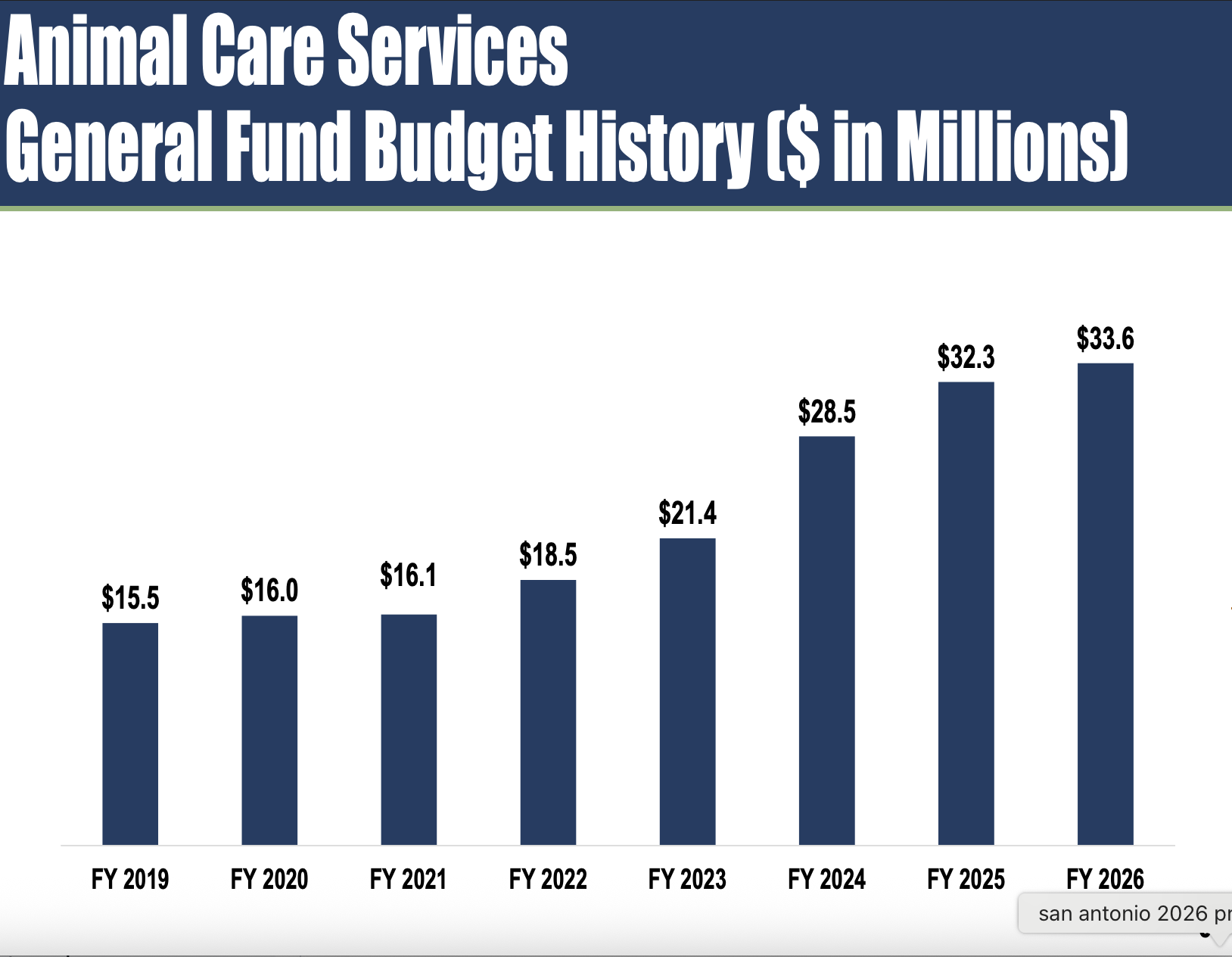
In the wake of numerous deadly dog attacks, San Antonio has spent big hiring new animal control officers, opening new community spay-neuter clinics and trying to improve its response rate to residents’ calls.
But one long-scrutinized metric continues to struggle even as city leaders boast about their other successes.
Last week Animal Care Services Director Jonathan Gary told the City Council that the municipal shelter’s live release rate — meaning the percentage of animals that are either adopted, transferred to another shelter or returned to the owner versus being euthanized or dying in the city’s care — was at 86%.
That’s lower than when animal rescue groups first flagged concern that San Antonio was backsliding on euthanasia rates three years ago. Generally, a shelter would need to save 90% of its animals to be considered a “no kill” shelter.
As San Antonio city leaders ramp up their focus on stopping dog attacks, however, it’s faded from the conversation about how to spend public resources.
This year the live release metric wasn’t even included in the department’s public budget presentation.
“I know you all get a lot of emails about the amount of euthanasia that is happening, and we, too, are concerned with that,” Gary told the council at that meeting. “But I think it’s important that we recognize where we truly are.”
Two years ago the fatal mauling of an 81-year-old veteran spurred a deep dive into ACS’s records that resulted in many new officers to respond to residents’ calls.
Only about 40% of the 90,000 calls received each year for help with animals that were either acting threatening or in need of medical care — deemed “critical” calls — were receiving a response.

Over the course of two years the City Council grew ACS’s budget by more than 50% to address that problem, and now nearly 90% of critical calls get a response, according to last week’s budget presentation.
But as those officers hit the streets, Gary said, this year the shelter took in 9% more animals.
“We knew this was going to happen when we got the additional officers,” Gary told the San Antonio Report. “The goal was to get to so many critical calls, and it was necessary to increase the intake.”
“The challenge we have now is, we’re getting them off the streets, but how do we save their lives?”
More dogs, more adoptions
Despite the criticism of euthanasia rates, animal welfare advocates say Gary’s approach is slowly setting the city back on the right track.
San Antonio achieved “no kill” status for the first time in 2016, yet by the end of 2022, its live release rate was at its lowest in seven years even as the department was taking in fewer animals, according to the animal rescue nonprofit Petco Love.
Gary was recruited from Oklahoma City at the end of 2024 to right the ship, when plans for more officers were already in motion. But the department has quickly gone to work trying to find homes for the increased number of animals.
“He’s made some commonsense decisions and policy improvements, especially regarding euthanasia, that I appreciate,” said Chelsea Staley, director of lifesaving at Petco Love. “His team is thinking more creatively about adoptions.”
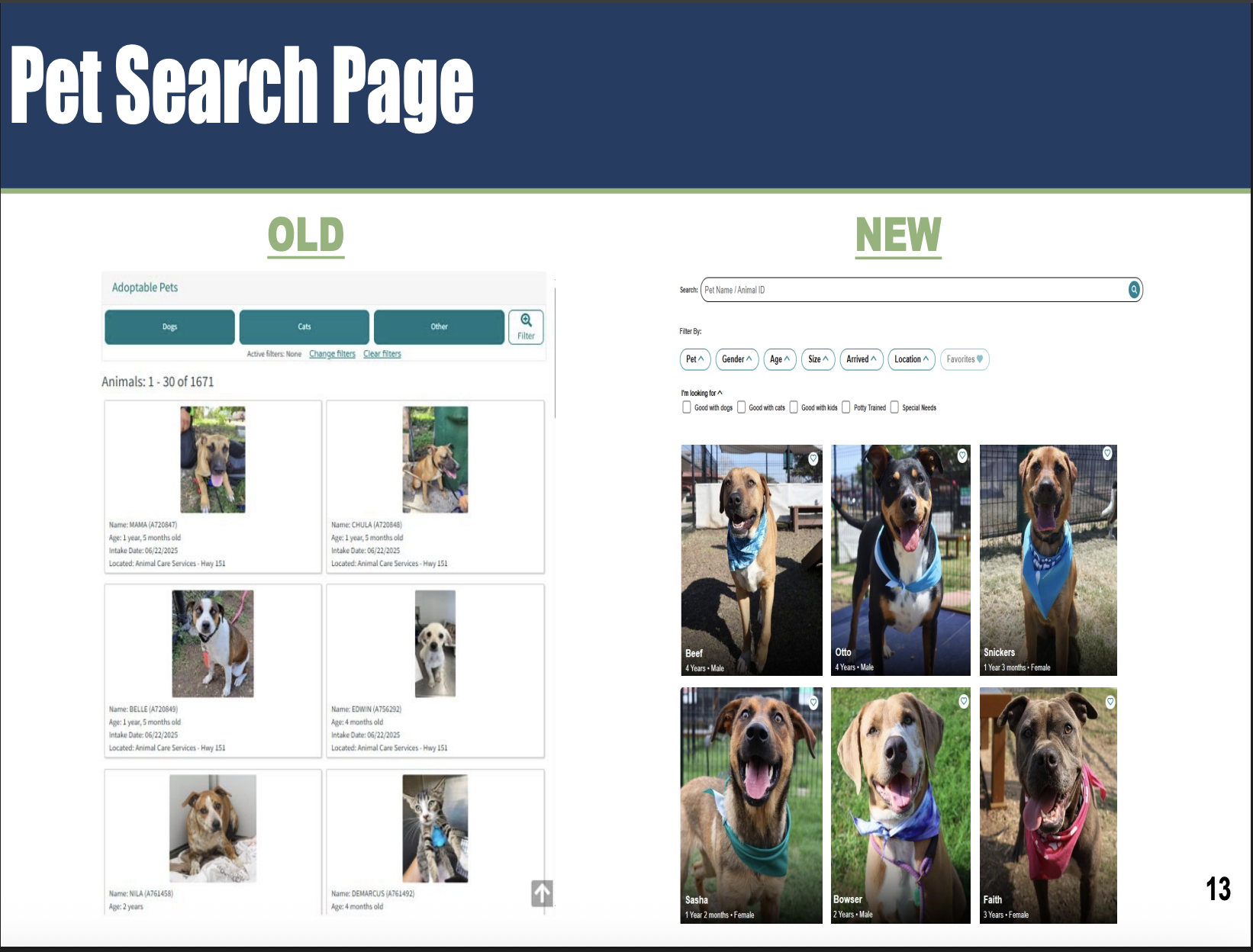
In Thursday’s budget presentation, Gary said ACS has been increasing the number of large-scale adoption events it hosts, overhauling the online registry of adoptable animals and working harder to return found animals to their owners.
He’s also pushed city leaders to lay plans for more kennel space so that dogs have more time to find a home, and recently started keeping dogs that have already been spayed or neutered off the euthanasia list.
In recent weeks the city also inked a deal to purchase an additional $2 million dog kennel previously owned by K9s for Warriors at its Westside shelter. That space is now being used to shelter nursing moms and their puppies, as well as other animals, who were previously at a higher risk for euthanasia due to lack of willing fosters.

Stray dog pickup
Council members were quick to point out at Thursday’s meeting that many stray animal calls still go unanswered.
Unless an animal is injured or acting threatening, calls from the public about stray animals are considered “non-critical,” according to ACS, and only about 32% of them receive a response from an officer.
Council members said residents expect all calls to receive a response — a move that would massively increase the number of animals coming into the shelter.
Gary agreed the focus on non-critical calls is already starting to ramp up.
Another 15 officers are about to graduate, he said, and the department is proactively meeting with residents in areas where they believe a large number of the loose dogs have owners, but are living free of restraint.
“There’s a certain number of calls that we just physically can’t get to, and a lot of those are just the friendly dog that’s running loose,” Gary said. “But as we’ve gotten better, we’ve seen that number get up.”