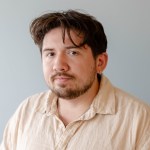
Jairo Sanchez didn’t grow up wanting to be a police officer. For much of his childhood, police represented disruption — arriving during moments of crisis, instability or fear.
Sanchez spent parts of his youth homeless in San Antonio, at times living out of a van. Other times, he bounced between unstable housing and public housing complexes.
“I’m a progeny of SAHA,” Sanchez said, referring to the San Antonio Housing Authority. “I was a SAHA and Section 8 baby. I know I grew up in a rough area. I became a product of my community. I was in the barrio where I did not like the police. I hated the police.”
But life has a way of bending in unexpected directions. For Sanchez, the journey began with a feeling that would eventually land him the Combined Law Enforcement Association of Texas Officer of the Year Award in 2025.
During his senior year in high school, the war in Iraq and the subsequent surge in military recruitment began to unfold. A then 18-year-old Sanchez remembers seeing many of his teachers recalled from the reserves into military service. That experience sparked a sense of duty within Sanchez.
“It wasn’t like, ‘I think this is my responsibility,’” Sanchez said. “But once I started to understand where I came from, and all the aid that came to my family — food stamps, housing. It felt more like, ‘This is my responsibility. This is my debt to give back.’”
There was another pull, too.
“I’d get to see the world,” he said. “It’s a pretty neat thing to get out of the barrio.”
Sanchez joined the military through the reserves, a decision that would take him far beyond his neighborhood — and eventually bring him back home to San Antonio.
He spent 15 years in the U.S. Army Reserves, working primarily in logistics. The role taught him planning, coordination and leadership; skills he would carry into his civilian life as he bounced between careers in logistics and procurement, electrician unions and Department of Defense contracting for administrative work.
The military provided structure and stability for Sanchez, but it also came with lessons in loss. Over the years, he lost several friends to suicide — experiences that shaped how he came to understand trauma and mental health.
Sanchez recalled one moment in particular that changed the trajectory of his life.
“A close army buddy of mine sent me a message. I thought it was a joke. You always think it’s not real,” he said. “I was able to somewhat get a location, and I was panicking at this point. I was panicking because I had acquaintances that took their lives, but this person was my battle buddy, they’re not supposed to do this. You have to be strong for me, you know.”
Sanchez had a general location of a hotel where the friend was trying to overdose, he felt lost and confused since there were so many hotels on this particular strip. So he dialed 911 and San Antonio Police showed up, his friend is alive to this day thanks to their intervention he said.
“That was when it hit me. It hit me again, that feeling when I saw my teachers cry, ‘Oh, you’re human. You’re a person too. You have a responsibility’ before it was with my teachers and then I realized that’s the same thing for police,” he said, referring to the moments that inspired him to serve in the military. “ That seed just kept growing in my head and at the time I was still in the application process for the Fire Academy but that seed lingered.”
That single interaction made him reanalyze his relationship with the police and rerouted his career once again.
“It got me thinking a lot about the times I had contact with police, and every time I did I realized I was the aggressor. Because I grew up bad, I remember officers yelling at me, but it was because I was the one being stupid,” Sanchez said.
Rather than continuing the process to join the Fire Department, Sanchez felt so moved he decided to apply for the police academy, once again he felt he had a debt to repay.
“I told myself ‘I’m just gonna see how far I can go.’ and that meant a lot to me because of what happened with my battle buddy,” he said. “ I told myself, ‘All I gotta do is just save one life and that’ll be my job, just one life.’ I didn’t know how long I would stay in the field but I would put my best foot forward, because that’s how I was raised.”
It took him two tries to be selected for SAPD, once a profession he hated, Sanchez reflected on the change in his perspective.
“I was taught a great person has great ideas but it takes an even greater person to have their mind changed,” he said. “We gotta learn from our experiences to get better.”
After graduating from the academy, Sanchez was assigned to patrol, spending the early years of his career between Southtown, Roosevelt and downtown — areas where he says many of his calls revolved around mental health crises and homeless individuals — and the same area where he himself grew up.
Sanchez became increasingly interested in communication — what he describes as “verbal judo” — the ability to read a situation, slow it down and meet people where they are emotionally before trying to resolve anything legally.
“Rather than going the avenue of ‘Hey, you’re breaking the law,’ this and that, where you might hit a wall where a person could say ‘Eff you, I don’t want to talk to you,’” he said. “I would ask more like ‘Hey, I know you, what’s going on, how are you doing? How long have you been homeless? What’s your goal to get off the streets? That just gives a different view. People are more cooperative and they feel like, ‘Oh, wow. This cop is understanding.’”
Over time, Sanchez began looking for a role that allowed him to lean into that approach — one where communication, follow-up and trust-building weren’t just tools, but the foundation of the work. He found it in the San Antonio Fear Free Environment, or SAFFE, unit.
Unlike patrol officers, SAFFE officers are assigned to specific streets or neighborhoods and focus on preventing crime before it happens by addressing quality-of-life issues. Their work ranges from coordinating graffiti removal and working with city departments to attending neighborhood meetings, engaging with youth and building relationships with residents and business owners.

For Sanchez, the transition felt less like a career move and more like a continuation, he’s assigned to the St. Mary’s Substation downtown. Sanchez continues to work in the same general area where he once grew up.
“I get to go back to the streets I used to walk with my hoodlum friends and I realize, man, if I would have known what I know now, things would have been different,” he said. “It’s like a Cinderella story, I feel fulfillment. I feel happy, even on my worst days ever, or the crappiest calls.”
The familiarity helps him connect with people who may otherwise be wary of police, especially those experiencing homelessness or mental health crises.
As for the one life Sanchez aimed to save when he started his journey, one man and his relationship with him embodies his beliefs in the power of communication and patience.
Throughout his career Sanchez would continuously encounter a 300-pound, 6-foot-tall man who experienced chronic homelessness. The man would continuously pace the streets while yelling and cussing into a broken cellphone. Sanchez began to work his “verbal Judo,” on a day the man was blocking traffic on the streets while shouting religious verses, Sanchez approached him to find out what was upsetting him.
The man was upset he had lost his bible, a situation Sanchez quickly remedied by giving him a bible that was donated to the police force by a church. The man’s entire attitude shifted and he became calm. Sanchez continued to develop a relationship with him as time passed until the man was arrested for breaking and entering, while officers showed up expecting a fight against the reportedly combative man, Sanchez recognized the man, diffused the situation and walked him out talking and joking.
Time passed without seeing the man again until Sanchez paid a visit to Haven for Hope, a nationally-recognized transformational shelter and services campus, and encountered the man yet again.
“He looked so different. He got off the narcotics. He got himself a temporary job,” he said. ”And, man, I was a little tearful, I was like ‘that’s pretty cool.’ With the amount of folks we talk to in our short careers, it’s always worth it even if it’s just one person we help.”

But Sanchez’s career has never been about just one person. Earlier this year, he and fellow SAFFE officer Frank Tapia helped organize a first-of-its-kind community 5K run and health fair, an event built around the same values that guide his work on the street.
Instead of charging registration fees, participants were asked to donate school supplies. The supplies went directly to students in the San Antonio Independent School District.
The 5K was hosted and logistically managed by SAPD officers, primarily SAFFE officers, while they were on duty. Officers handled traffic control, course operations and coordination without relying on overtime or off-duty work. The event was designed to be self-sustaining, with SAPD’s logo front and center.
When Sanchez and his colleagues looked for similar efforts, they couldn’t find another police department in the country that had successfully pulled off a fully free 5K and health fair led by officers and built around donations instead of fees.
Sanchez co-created the event with Tapia, designing the logo, handling much of the planning and served as race director on the day of the event.
What stayed with him most, though, wasn’t the logistics or turnout. It was the response.
Sanchez said some participants told him they trained for weeks just to take part — not because they were runners, but because they wanted to be part of what the event represented.
“That meant a lot,” Sanchez said.
The success of the event drew attention within the department and beyond. The concept, execution and impact ultimately led to Sanchez receiving the 2025 Officer of the Year award from the Combined Law Enforcement Associations of Texas, the largest police labor union in the state with more than 28,000 members.
I truly did put my heart and soul into it, and I was very fortunate, and I did not expect an award,” he said. “The idea is that, if we could do this here, and another city does their own, it can become a norm across the United States.”
For Sanchez, the award has prompted reflection more than celebration. The work, he’s learned, isn’t always about dramatic moments or immediate outcomes. Sometimes it’s about showing people a different version of policing than the one they expect.
Sometimes it’s about planting an idea that sticks long after the interaction ends.
“Going back to why I became a police officer, I wanted to save one life. Well, what does that really mean?” he reflected. “Maybe, inspiring people is part of that as well.”