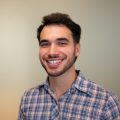
On Dec. 26, 2024, South Texas cattle rancher Jody Dietert walked into his bathroom and started throwing up blood.
Dietert was airlifted from his ranch in Carrizo Springs to a nearby hospital, where he was diagnosed with advanced cirrhosis, and then transported to University Hospital in San Antonio.
Decades of alcohol abuse had been quietly scarring Dietert’s liver until it started to fail with little warning. The damage was permanent. Dietert likely needed a transplant if he wanted to survive more than a handful of years.
Dietert’s sister-in-law, Marisol Moreno, volunteered to donate part of her liver for a procedure known as a living donor liver transplant, in which surgeons remove a portion of a healthy person’s liver and transplant it into someone whose liver is failing.

Moreno, however, wasn’t a match for her brother-in-law.
So she entered a swap program, agreeing to donate to a stranger who was compatible with her in exchange for another donor doing the same for Dietert.
Dietert and Moreno became part of a seven-pair living donor liver transplant exchange at University Health, a complex matching process that connected seven donors and seven recipients.
On Friday, all 14 participants gathered at University Hospital in the South Texas Medical Center, for the first time, to meet the people whose lives they saved, and the ones who saved theirs.
For most of the donors, the decision was personal. They agreed to undergo surgery and months of recovery so that a loved one could receive what they needed to live.
Except for one donor: Robert McDonald, a 39-year-old communications professor in Kansas City who donated a portion of his liver not expecting anything in return to whoever needed it — and ultimately became Dietert’s match.
A lifesaving swap
Dietert’s drinking habit started at an early age, eventually becoming a daily ritual. One six pack of beer a day turned into 12, then to 24.
He says he hadn’t experienced any major symptoms up until his emergency in late 2024. But inside his body, irreversible damage was taking place.
For most patients, getting a new liver requires getting on a waitlist for a deceased donor organ. The average wait time in the United States varies widely, from months to several years, depending on the urgency of the patient’s needs.
Dietert couldn’t afford such a delay. Without a transplant, the survival rate for end-stage liver disease is often measured in months to a few years.

The shortage of deceased donor organs has pushed more transplant programs to consider living donor liver transplants. The surgery has been performed for decades — the first was done in 1989 in the U.S. — but it remains relatively rare in the U.S., accounting for about 6% of liver transplants.
“We do have a robust deceased donor network in the United States,” said Dr. Jonathan Cullen, a transplant surgeon at the University Health Transplant Institute. “That’s the traditional bread-and-butter way of doing liver transplant. [Living donor liver transplant] is a technically more challenging operation to do. It is very resource intensive and takes specialty experience and training.”
University Health’s liver transplant program started ramping up its living donor capabilities in 2019, Cullen added.
The process involves two major operations: one on the donor, during which surgeons remove a portion of the liver — up to 70% of it — and one on the recipient, whose failing liver is removed and replaced. Both livers regenerate over the following weeks and months, thanks to the organ’s unusual ability to regrow much of its lost mass.
Moreno volunteered to save her brother-in-law. But after extensive testing, doctors determined her liver was too small to support Dietert’s larger frame.
That’s when an altruistic stranger 800 miles away entered the picture.
An altruistic donor
During the summer of 2024, McDonald, a communications studies professor at the University of Kansas, signed up to donate a portion of his liver to a friend who lived in the San Antonio area.
After undergoing all of the extensive screening and testing protocols at University Health, doctors told him that a better match for his friend was available, and his generosity was no longer needed.

He could, however, still donate a portion of his liver for whoever may need it. But such a donation was by no means expected given the invasive nature of the procedure and months-long recovery timeframe.
To McDonald, though, he had already undergone all of the testing to ensure he could donate; his job allowed him some flexibility to recover; and mentally, he had already committed to the idea of donating. It almost felt like a waste of resources and time to not go through with it, he said.
“I was already psychologically committed to it anyway,” McDonald said. “So why not just do it for somebody that I don’t know? It seemed like a pretty straightforward decision for me.”
McDonald wasn’t a complete stranger to San Antonio. His wife’s family lives here and he obtained his master’s degree in Austin.
He spent roughly two weeks in the hospital following his surgery, followed by two months of taking it easy and recovering from home. He protested against some of the more heroic titles that have been bestowed upon him.
“I honestly didn’t think much of it,” McDonald said. “Somebody needed my help, and I was just happy to help.”

A second chance
On Friday, the seven pairs, surgeons and hospital staff gathered at University Hospital to watch the participants meet for the first time. They sat at the center of a table with boxes in front of them that contained the name of their matching donor or recipient.
After speeches from the donors and a countdown to the reveal, the participants shuffled around the room to meet their match.

It wasn’t a total surprise to Dietert.
He had seen McDonald in the hallways of University Health last August, when the surgeries took place, suspecting that he could have been the so-called altruistic donor whose liver would soon be implanted into him. Dietert even recalled speaking with him. McDonald said those two weeks were mostly a blur.
When the contents of the box in front of him confirmed his suspicions, Dietert greeted McDonald with a firm handshake and a hug.
The families of the two men shared their experiences and stories of recovery. “It’s a good liver,” Dietert joked, mentioning how quickly he recovered post surgery and how great he has felt since.
Dietert has been sober since Dec. 26, 2024.
To express their gratitude, Dietert and his wife gifted McDonald a silver necklace with a compass pendant and a message engraved on the back: “lead the way.”
“I’ve got no excuses. I’m 100% guilty of what I’ve done,” Dietert said. “I didn’t think I could live without [alcohol]. I’ve found my life’s way better without it.”