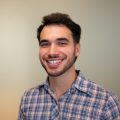
Southwest Research Institute has named Ben Thacker as its new chief operating officer. In his new role, Thacker will direct operations of SwRI’s technical divisions and administer internal research programs.
SwRI is an independent nonprofit research institute founded in 1947 by San Antonio philanthropist Tom Slick. Its research and development solves problems “from deep sea to deep space and everywhere in between.” Thacker’s career epitomizes that slogan.
He spent his first five years as an engineer working on submarines at General Dynamics in Connecticut. And during his nearly four-decade long tenure at SwRI, Thacker helped develop probabilistic analysis software that could better simulate the risk of engine malfunctions on NASA space shuttles.
He also helped scientists at Los Alamos National Laboratory in New Mexico apply the same technology to the U.S. nuclear weapon stockpile in the wake of the Cold War. Thacker was also instrumental in assessing the risk of future shuttle flights following NASA’s Space Shuttle Columbia disaster in 2003.
Last week, the San Antonio Report sat down with him to talk about what’s changed since he arrived in San Antonio in 1988 and what the future holds for the research institute.
The interview has been edited for length and clarity.
How did you end up getting the job in San Antonio?
I came down and interviewed, and I still remember how special I felt. The interview was amazing. And we still interview like this today. You spend the whole day with different people for 30 to 45 minutes each. They take you out to eat, talk a lot about the job, show you around. It was just very warm and welcoming. And as they were explaining the way this place works, I was just getting more and more excited that I had finally found the kind of job that I was looking for.
[Namely], we write proposals to bring in our own funding, so we have a lot of control over the technical work we do. There is an ocean of problems and needs. You can pursue things that you’re interested in by virtue of the conferences you go to, the technical committees you sit on and and the people you interact with.
You meet people and you tell them, ‘I’m from Southwest Research Institute. We solve problems.’ And before too long, you’ll have projects and you’ll be working in an area that you wanted to work in. Most companies, you don’t have that choice. Most companies sell a product or provide a service, and engineers and scientists are used to make that product or provide that service.
The first project you worked on involved space shuttle main engine components. Can you explain what that means?
So the space shuttle has liquid rocket engines. It’s got the external fuel tanks, liquid hydrogen and liquid oxygen. That’s the fuel. It’s also got two solid rocket boosters that are used to get it out of the Earth’s atmosphere and then they’re jettisoned. The liquid rocket engines stay attached to the orbiter or the space shuttle.
The kind of pressures and temperatures that are inside of that engine when it’s operating, no instrumentation can survive it.
You can’t do any testing at these pressures and temperatures so you have to use computer simulations. Except nobody believes computer models unless they’ve been validated. And furthermore, uncertainties — like natural variations in things like material properties and loads and things like that — greatly affect whether these engines work.
[We were] essentially taking probability and statistics and combining it with numerical simulation so that we can simulate uncertainties. So the whole NASA project that I was hired to be on a team to help is to develop methods that would be far more efficient, but just as accurate, if not more accurate. So we came up with algorithms that were much, much faster and more efficient.
Was that work tied to NASA’s Return to Flight program, which you later worked on?
Yeah, in a sense. The Return to Flight program, of course, was the response to the Columbia burning up on re-entry. What had happened is a piece of [insulating] foam came off of that external fuel tank. The hydrogen and the oxygen are stored at cryogenic temperatures, so it’s got sprayed-on insulation, kind of like spray foam insulation in your home, and that keeps it cold.
They hadn’t really paid a lot of attention to the foam. Somebody started asking the question, ‘Well, wait a minute, could that have broken a hole in the leading edge of the wing?’ Because if it did, it would explain perfectly what happened on re-entry. It was a plausible theory. What we did at Southwest is we built guns, special guns, to launch foam [and test the theory].
So you had to have a super long barrel and accelerate it slowly to get it to the speed that foam was going when it hit the leading edge, around 700 miles per hour. And on one of our shots, we blew a hole in the leading edge of the wing. Nobody will ever know for sure exactly what happened, but the smoking gun theory says that’s what happened.
So the Return to Flight program [was centered on] ‘Okay, now what can we do?’ [NASA] wanted a quantified risk number for ascent conditions, what is the risk of launch?
We had tools that would compute the size and the location where foam could come off of the external fuel tank. And then we had a trajectory code that would say, these are the possible paths that it would take. We had another tool that would calculate damage. We hooked all these tools together, and we used the code that I was initially hired to help develop, which is called NESSUS.
So we hooked all these codes up into NESSUS and delivered it to the engineers at [NASA Johnson Space Center in Houston], and then they used this toolset for any given day they were planning on launching. They could feed in weather conditions, wind, whether it was raining, upper atmosphere, clouds, temperature, all that, humidity. And then they could compute the probability of functional kill, if you will. Perforation, they preferred to call it. And then NASA would make a decision whether to launch or not based on that risk number.
NASA got beat up pretty bad [after the Columbia disaster]. Because the review committee came back and said, ‘You don’t really know what the risk is. We know that it’s riskier to fly as an astronaut in the space shuttle than it is to fly as a passenger in an airplane. But you don’t even know what that number is. You haven’t tried to really compute it.’ And that’s what we helped them address.

You also worked with the Los Alamos National Laboratory. Tell me about that.
[After developing NESSUS] we started teaching a [weeklong] short course every year. Fast forward to the early to mid ‘90s, I got a phone call one day from this guy I used to know at General Dynamics, and he said, ‘Hey, I’m at Los Alamos now, and one of my guys went to your short course.’
He said, ‘With the Nuclear Test Ban Treaty [a United Nations treaty banning nuclear weapon testing in 1996], we’re kind of stuck. Because the way that we certify nuclear weapons in the stockpile right now is to take one out and go to New Mexico or White Sands and detonate it and prove that it works.’
[After the treaty], we have to do this with numerical simulation, and we know we’re going to have to have probabilistic analysis involved, because it’s going to be a probability-based answer as to whether or not the weapon can be certified that it’s going to work if we need it. They called it stockpile stewardship.
We started adapting NESSUS to the kind of simulations that they were doing at Los Alamos, which were incredibly complicated.
We were simulating different pieces of the [nuclear] weapon itself, some of which I can’t talk about, obviously. The inside of a nuclear weapon is like the inside of a submarine; they are incredibly complicated with very tight tolerances and lots of different materials. That was a fun chunk of my career that I didn’t see coming.
You’ve been here almost four decades. What’s changed since you first arrived?
We’ve gotten bigger. Now we’re over 3,000 [employees].
Our mission is to benefit government, industry and public through innovative science and technology. And I like to shorten that down even further: we’re problem solvers. And that’s true to this day, that has not changed. The thing that’s changed, by virtue of the fact of being bigger, is that we can solve bigger problems.
When this company maybe only had 10 or 20 employees, there would be no way that we could build a spacecraft like New Horizons [a large framed photo of which hangs above Thacker’s desk] and is now multiple billions of miles past Pluto.
When you have more people and more diverse specialties, education and experience, background and all that. You can just do bigger things. We’re also able to move even faster than most companies can move, because we rarely have to subcontract.
We’re a government contractor, so about 60% of our revenue’s from the government, and then 40% is from commercial. We were the other way around before the pandemic, but the pandemic slowed commercial industry down.
Another thing that’s changed as we’ve gotten bigger is more bureaucracy, and it’s unavoidable, but there’s more regulations that keep coming down. We’re in the middle of preparing and getting certified to handle controlled unclassified information.
So it’s not classified, but it’s controlled. This is government data, and we have to go through very, very critical audits to demonstrate that our computer systems and anything we have on paper that’s controlled on classified information is protected the way it has to be protected. And that’s just a layer of bureaucracy that we didn’t have a year ago. It’s just a reality. If you want to work for the government, you have to follow government rules. And the government keeps increasing the number of rules.
What’s next for SwRI? Are the big problems changing or are the areas SwRI focuses on staying the same?
Well, physics hasn’t changed much in many, many decades. But technology sure has.
AI. Look at what that’s doing. It’s changing the world. It’s helping us to work faster and get things done more efficiently, because we’re not just using it to improve emails, we’re reusing it to control systems. We have to be very careful, of course, when we’re doing that, but we’re seeing a lot of changes in the world of science and engineering due to AI.
It’s exciting because we’re starting to look at doing some really big things that might not be able to be done here on campus. Like a full-scale gas turbine engine test facility, for example. There’s only one in the world, and it’s in Germany, and it’s got a year or two [worth of] backlog.
We used to be out in the country back in the ‘40s when we started. We’re in almost the middle of town now. So there’s things like that that are needed that would definitely require congressional appropriation money. It would require tens of millions of dollars.
I think last year we ran 4,500 projects at the institute. I want to do 5,000. I want to do 6,000. I want to see growth like that. But I also want to see us do $100 million projects, really big things that nobody else can do. But they’re a lot harder to arrange.
Are there any projects you want to highlight that are happening right now or happening in the future?
One that’s pretty close to mind is CAMP, which is the Center for Accelerating Materials and Processes. It involves high-speed aerospace engines, which are difficult to make. Right now, it will take approximately three or more years to go from a blueprint to an article that can be flown to see If it’s going to work.
The reason it takes three or more years is the supply chain. A component has to get built and it has to be heat treated and has to be welded, and none of these capabilities are in the same physical locations. And a lot of these parts are classified, so you can’t just drop them in the mail or put them in a UPS truck and take them from point A to point B. So we were funded by the government to bring this entire supply chain under one roof. The goal is to get that blueprint-to-test-article down to three or four months instead of three or four years.
We are the perfect location for something like that because we’re an independent, objective, nonprofit research institute. If the government had funded a [defense manufacturer] like Lockheed Martin or Raytheon to build something like we’re building, they would service Lockheed or Raytheon, not their competitors.
We’re agnostic. We work for anyone. We work for everyone.