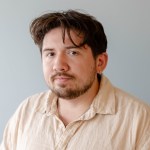
Robert Santos returned to his hometown to share his story — from growing up on San Antonio’s West Side to becoming the first Latino to lead the U.S. Census Bureau.
He encouraged students attending his talk Wednesday at Our Lady of the Lake University to value their own lived experiences in everything they do.
While much of his speech focused on family and career, Santos also spoke about the importance of the census. He said fear and mistrust in immigrant households remain barriers to participation, which could leave communities like San Antonio undercounted and underserved.
That concern, he added, is rooted in his own understanding of San Antonio and the communities where he grew up.
Santos recalled growing up not far from Thiry Auditorium where he was speaking, attending Little Flower Catholic School and later Holy Cross High School. He credited his Catholic education with shaping both his values and career path.
“Going to parochial school for 12 years — first with the nuns, then with the brothers of the Holy Cross — instilled in me a respect and value for human dignity that has stayed with me for the rest of my life,” Santos said.
By the time he graduated college two things resonated with him: a passion for math, which he traced to his father’s influence, and a commitment to helping people, rooted in the values he learned in San Antonio Catholic schools.
That passion and commitment led him to become a statistician and later carried him to his political appointment as Census Bureau Director under the Biden administration.
He resigned from the bureau in January and now lives in Austin, where he has returned to hobbies such as fishing and photography, including assisting with South by Southwest events, where he once served as a crew chief supervising photographers.
Looking back, he said his leadership at the bureau rested on three principles: bringing one’s whole self to the table, engaging with communities directly and including diverse perspectives.
Those ideas weren’t abstract concepts but tools he used while overseeing one of the nation’s most complex undertakings. Combining technical expertise with lived experience helped ensure census data reflected reality on the ground.
Community engagement was essential to building trust in neighborhoods where participation had historically lagged. Designing surveys with diverse perspectives in mind made sure that daily realities of every American would be taken into consideration.

In a follow-up interview, Santos said those principles remain critical as preparations begin for the 2030 census. He warned that some neighborhoods in San Antonio and across the country consistently show lower participation.
“Neighborhoods with higher concentrations of Latinos, African Americans and renters have historically had lower participation rates,” Santos said. “Those communities still tend to be undercounted.”
That undercounting in the census affects more than just congressional representation. It shapes daily life. Federal agencies rely on census data to determine what areas would benefit from expansion of services ranging from broadband internet and vaccine distribution to infrastructure improvements using federal funds.
“You need census data to say there are population concentrations in this county and that county,” Santos said. “That’s how federal agencies make decisions about where services are needed.”
A variety of factors contribute to that inaccuracy, Santos said. In 2020, for example, the pandemic deepened the divide between households able to respond online and those struggling with basic needs. Suburban families with stable jobs and reliable internet could complete the form with ease, while working-class neighborhoods juggled job loss, remote schooling and limited internet access.
Mistrust in government also remains a barrier, especially in immigrant and mixed-status households. Proposals to add a citizenship question in 2020, Santos said, fueled fear that information could be used against families.
That fear, he noted, has not disappeared. In today’s polarized climate — where immigration remains at the center of national debate — communities may be even more hesitant to participate.
Recent legal changes have only added to that anxiety. In Noem v. Vasquez Perdomo, a recent Supreme Court ruling granted federal agents broader powers to stop people in public places based on race, ethnicity, language or the kinds of work they do — a move civil rights groups warn could enable racial profiling in immigration enforcement.
At the same time enforcement operations and ICE detentions have increased under the Trump administration, reinforcing fears that census disclosures might have unforeseen consequences.
“The worst case scenario is that immigrant communities lose trust and don’t participate,” Santos said. “That could recreate, if not exacerbate, some of the undercounts we’ve seen before.”
Addressing that challenge, Santos said, will require more than federal outreach. Trust has to be built locally. Community leaders, local governments and residents all play a role in ensuring their neighbors are counted.
“The Census Bureau cannot be successful unless it has the active participation of the community,” he said.