


About six years ago, my husband and I discovered what most people mistakenly think of as the “rhythm method.” Some call it natural family planning, others fertility awareness, others refer to it as natural contraception or organic birth control. We first heard about it when my husband returned to the Catholic faith. I’m not Catholic, but as we investigated, we discovered it was much more than “what the Church wants you to do” or “a way to get Catholics to have van loads of kids.”
The first thing I realized was that I actually knew one of these methods. I had used it in 1992 to conceive our daughter. The book “How to Choose the Sex of your Baby” taught me the use of the ovulation charting method in order to know exactly when I ovulated and to time intercourse accordingly. It worked exactly as it was supposed to. But though I came to know exactly which days of any month it was possible or me to get pregnant, it never occurred to me that I could use the same method for avoiding pregnancy. Like most American women, I had swallowed the line that contraceptives were a necessity of life.
That’s why three years ago my husband, Gérard, and I realized that fertility awareness methods and their benefits were far-too-well-kept secret and started Natural Womanhood as a nonprofit organization in San Antonio. That’s why on July 21 we’re launching our original documentary, “Natural Love Stories,” about the dangers of contraceptives and the amazing option that fertility awareness offers. It’s a step to opening the conversation about these options in San Antonio and beyond.
A Q&A will follow the free screening at Alamo Drafthouse Park North with San Antonio Dr. Steven Pilkington of obstetrics and gynecology (OB/GYN) and special guest Karen Langhart, who is flying in from Phoenix for this occasion. “Natural Love Stories” is dedicated in memory of Langhart’s daughter, Erika.

Karen and Rick Langhart lost their daughter at age 24 to a fatal double massive pulmonary embolism on Thanksgiving Day in 2011. Erika was a successful, passionate young woman who had graduated magna cum laude from American University and was looking forward to law school. NuvaRing, a hormonal contraceptive manufactured by the pharmaceutical giant Merck, was cited as the cause of her death. The Langharts turned down their part of a $100 million settlement from Merck to a group of 3,800 plaintiffs for damages from NuvaRing. They continue to campaign for greater transparency about the risks of hormonal contraceptives.
Despite the blind eye of medical institutions, which continue to promote them as safe, these drugs are making headlines for the risks and the casualties they cause.
The formulation of the new generations of pills such as Yaz and Yasmin include a form of estrogen that increases the risk of dangerous blood clot. Their manufacturer Bayer, had to pay $1.6 billion to thousands of families who suffered harmed or death by these drugs. Such is the cost of doing business for these manufacturers.
Combined oral contraceptives have been classified as a Class 1 carcinogen by the World Health Organization, along with asbestos and tobacco. While hormonal contraceptive may reduce the risk of rare cancers like ovarian cancer (which risk is equally reduced by pregnancy), they are clearly linked to an increase in breast cancer, which is 10 times more likely to happen to women than ovarian cancer.
Few women are aware that effective, natural alternatives exist. That is Natural Womanhood’s mission: to raise that awareness. We are the David against the millions in the marketing budgets of Goliath pharmaceuticals companies.
“We had an alternative, but no one ever told us,” said a young doctor whose wife suffered a permanently debilitating stroke as a result of her hormonal birth control at age 35.*
Many women are increasingly questioning the use of hormonal contraception, especially those women who are conscientious about natural health and the environment. In the 20-plus years since I first encountered these methods, a movement has risen up to inform women of these options, beginning with Toni Weschler’s “Taking Charge of your Fertility” in 1995, to more recently Holly Grigg Spall’s “Sweetening the Pill,” a best seller now being made into a documentary by Ricki Lake.
The new fertility awareness methods are the result of 80 years of scientific advancement over the old “rhythm method” and offer effectiveness rates rivaling or surpassing other contraceptive options.**
Digital apps like Kindara, Clue or Glow are proliferating on the market and facilitating their use. Apple has included fertility markers as part of its new health app iOS9. These methods are used successfully throughout the world and are essentially free for life—the only thing for sale is knowledge.

Our documentary was produced on a tiny budget, funded by individual local donors. “Natural Love Stories” tells the stories of three couples who, after experiencing various health problems with hormonal birth control, switch to natural fertility awareness based methods. Dr. Pilkington and Dr. Joan Meaney of San Antonio, and Dr. Kathryn A. Karges and Dr. Brooke Jemelka of Houston also contribute their expertise about the dangers of contraceptives and the benefits of natural methods.
This project responds to two needs: to provide knowledge of an effective alternative to hormonal contraceptives and to bring health literacy to women. A 2014 Yale study shows that 40-60% of American women have “complete misconceptions” about basic reproductive facts. Because of the side-effect of contraceptives, 67% of women who start on the pill quit after a year. But many have no clue of a better solution. According to 2010 CDC data, 60% of women of reproductive age have relied on withdrawal as birth control, and 18% have used other ineffective methods such as the antiquated “rhythm method.”
San Antonio women need better information about their own biology and about their options, especially women who have other risk factors that make hormonal contraceptives especially dangerous (obesity, diabetes, smoking). We need better ways to address teen pregnancy than subjecting teens to the risks of long-acting reversible contraceptives, for which the City of San Antonio allocated federal funding last year.
Natural alternatives to birth control is the topic of a growing conversation worldwide. Eight months ago we launched Natural Womanhood’s new website and a blog. Since then, we have had 30,000 unduplicated visitors on our site, and we have published 40 blog posts. About 18% of our website’s visitors come from 132 countries outside the US.
We hope all those interested in joining this conversation will come to the premiere of the documentary. It’s free and open to the public. The documentary will premiere at the Alamo Drafthouse Park North at 6 p.m. Tickets are available on Eventbrite. For more information, got to Natural Womanhood’s website or email anna@naturalwomanhood.org.
Editor’s Notes:
*Serious and fatal side effects of hormonal contraceptives are quite rare, according to the Mayo Clinic, but they increase with age and other factors like smoking.
**While contraceptive implants have a 99.5% effectiveness rate, fertility awareness is at 76% and climbing, according to the CDC. The CDC, however, includes all natural methods in this category, including the obsolete rhythm method.
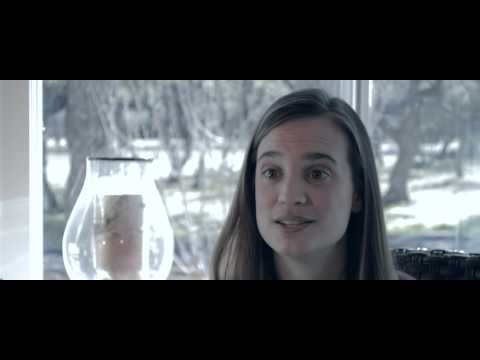
Featured/top image: A woman advocates for the use of fertility awareness based-methods for birth control. Photo via Facebook.
Related Stories:
Local Teen Pregnancy Rates Falling, Still Too High
Preventing Teen Pregnancy: Proof We Are #StrongerTogether


This article needs citations for its stronger claims, such as that the natural techniques “offer effectiveness rates rivaling or surpassing most contraceptive options.” That’s pretty hard to believe and requires some sort of evidence.
This is so dangerous. I like the idea in theory for monogamous couples that are mature enough to understand the woman’s cycle. It’s terrible that hormonal birth control doesn’t work well with everyone, but there will be far more unplanned pregnancies than women who don’t jive well with hormonal BC. Regardless, the copper IUD isn’t hormonal.
Taking Charge of your Fertility should be required reading for every 8th grader of both sexes. It is NOT the rhythm method.
Can someone explain what fertility awareness is? It must be pushed out by all of the other awareness that is being raised.
The number of times “natural” got used in this is a pretty good sign that they just want to sell something.
The CDC data was added by the RR editors and conflicts with what I say elsewhere in the article. The CDC lumps together all “natural” methods, including the obsolete “rhythm method,” which is based on averages, not on the individual woman’s biomarkers. I know the CDC has quite a bit of credibility but they are under the influence of pharmaceutical companies on this one and are not up on today’s natural methods.
If you don’t accept the CDC data, could you offer a citation to some peer-reviewed research which shows the effectiveness of your preferred technique?
I’m really glad to see this getting picked up by the Rivard Report. Also, many compliments to my doctor, Dr. Pilkington, who has the most caring heart for women’s health and education. I’ve been seeing him for years now and am amazed at how much he helps not only his patients but also women who find themselves in hard situations with limited options.
What a bunch of crackpot quackery.
You’re going to have to do better than that. I assume this article is the first time you’ve heard about fertility awareness? It’s not enough to call names and run off.
Look, your religious superstitions do not make something scientific. I don’t have to do better than anything– You’re the one making specious claims without evidence.
I assume despite writing this article of witch doctor mumbo jumbo, you’ve never heard of sperm vitality.
Before taking such a reassured position and dismissing fertility awareness as “religious superstitions” and “specious claims” and “witch doctor mumbo jumbo,” which are logical fallacies that do not advance the argument, you might consider informing yourself about it. It’s not my personal invention. The science that allows fertility awareness to work is real science. We are no longer in the dark ages about these facts. That science can actually pinpoint a day of ovulation through the signs of the body and that we can actually know how long the sperm remains alive and how long the eggs remains alive (allowing us to time intercourse to either avoid conception or achieve it) doesn’t seem that hard to believe to me, but it does seem to be a lot of accept for some people, for some reason. Many studies show a high effectiveness rate for fertility awareness based methods, in the high 90s, with natural methods. Here are just a couple of sources: http://www.aafp.org/afp/2012/1115/od1.html, http://humrep.oxfordjournals.org/content/22/5/1310.full. There are many others if you care to look for them. However, the CDC and most doctors will say otherwise. Doctors don’t learn anything about it in med school and the CDC lumps the figures together with the oldest form of natural methods. I know, hard to believe, that the CDC is not actually right about this point.
I appreciate the extra citations and clarifications.
However, that first CDC link shows that fertility awareness planning is less effective than the withdrawal method at preventing pregnancies. That doesn’t inspire confidence.
This is great. The more informed choices people have, the better their decisions can be to suit their personal situations. Hopefully, they will have access to all forms of family planning, including access to appropriate counseling and end of pregnancy services, if the success rate is really only 76% and that’s their choice.
Many studies show a high effectiveness rate, in the high 90s, with natural methods. Here’s just a couple of sources: http://www.aafp.org/afp/2012/1115/od1.html, http://humrep.oxfordjournals.org/content/22/5/1310.full. However, the CDC and most doctors will say otherwise. Doctors don’t learn anything about it in med school and the CDC lumps the figures together with the oldest form of natural methods. I know, hard to believe.
This article didn’t even go into detail about what these “natural methods” are… It just spent the majority of the piece knocking hormonal birth control. While the author of the piece may have the resources and time to research and track her ovulation cycle, many lower income folks don’t have the ability to do so. Advocating that people stop using contraception is dangerous as many people are not properly educated or vigilant enough to really monitor this.
That being said, the IUD is a great alternative to the daily pill (there are non-hormonal varieties and the “hormonal” kind is 1/100th of the amount of hormone), and is something that I advocate for to all of my friends. 85% of OBGYNs use the IUD, while only 5% of the general population use it. They just need to be put in and it lasts 5-10 years, depending on which one you get! See this article for more info and talk to your doc about it–it’s covered by most insurances (mine was free) http://www.glamour.com/health-fitness/2011/08/the-birth-control-your-ob-gyn-uses
I advocate that women be educated and receive a fair presentation of ALL their options for family planning, and also be informed of all risks. I want all women to know that natural options are available. Using fertility awareness based methods successfully does depend on being well informed and well trained, but I think that’s a good thing in itself. Keeping women ignorant or considering them incapable of learning or being responsible is not the answer. Poor women and illiterate women around the world have learned to use these methods with great success. They are simple to learn and use. As for IUDs, they come with their own set of risks and side-effects and complications (including perforation). They’re not the answer for everybody. Not everyone likes the idea of having a foreign object inserted in them, and they also function by irritating the lining of the uterus and preventing implantation of an embryo, which is a problem for women who respect life from conception. Fertility awareness offers more women more options, without health risks, and gives them self-reliance and self-knowledge and power over their own fertility, working with their bodies instead of against them. It’s free for life once you learn, and free training is available, too.